
16 March 2026
An anatomical introduction to the glutes and 4 science-proven exercises to train them
Among the areas of the body that receive the most attention during training, the glutes stand at the top of the list. And not just for aesthetic reasons: they play a key role in posture, stability, and everyday performance. Understanding how to train them effectively means investing in more efficient movement, greater functional strength, and long‑lasting, meaningful results.

NEUROMUSCULAR ACTIVATION OF THE BUTTOCKS MUSCLES
The gluteus is not a single muscle, but a complex group comprising three distinct muscles. Forming a key part of the posterior kinetic chain, they represent some of the largest and strongest muscle group in the human body, serving key postural and movement roles.Their functions for the body take three different activities:
Without taking into consideration the role that genetics has on the shape and volume of the buttocks, we will try to deepen the main dynamics on which it is possible to intervene with training.
To get the most out of an exercise, it’s important that the muscle you want to train is actually doing most of the work. When it comes to glute training, this doesn’t always happen. Many exercises that are commonly believed to target the glutes actually place a greater demand on the hamstrings, the muscles located at the back of the thighs.
It’s also common for the hamstrings to take over during exercises that are meant to focus primarily on the glutes. This happens because the body naturally recruits the muscles that are best prepared or most efficient at performing a movement. As a result, even when you consciously try to squeeze your glutes, they may not be fully engaged, allowing other muscles to do most of the work.
To better understand how to activate and train the glutes effectively, it helps to start with their anatomy and the role they play in the body’s movements.
- Posture
- Performance
- Movement
Without taking into consideration the role that genetics has on the shape and volume of the buttocks, we will try to deepen the main dynamics on which it is possible to intervene with training.
To get the most out of an exercise, it’s important that the muscle you want to train is actually doing most of the work. When it comes to glute training, this doesn’t always happen. Many exercises that are commonly believed to target the glutes actually place a greater demand on the hamstrings, the muscles located at the back of the thighs.
It’s also common for the hamstrings to take over during exercises that are meant to focus primarily on the glutes. This happens because the body naturally recruits the muscles that are best prepared or most efficient at performing a movement. As a result, even when you consciously try to squeeze your glutes, they may not be fully engaged, allowing other muscles to do most of the work.
To better understand how to activate and train the glutes effectively, it helps to start with their anatomy and the role they play in the body’s movements.

ANATOMY OF THE GLUTES
The gluteal muscle group consists of three distinct muscles that work in synergy to stabilize the pelvis and drive lower-body movement: the gluteus maximus, the gluteus medius, and the gluteus minimus.
As the largest and most superficial muscle, the gluteus maximus is the primary engine for hip extension and lateral rotation, shaping the posterior hips and generating powerful upward force.
Directly beneath it lies the gluteus medius, a fan-shaped stabilizer critical for hip abduction and keeping the pelvis level during single-leg weight-bearing activities.
Deepest of the three, the gluteus minimus works closely with the medius, assisting in abduction and internal rotation while providing essential joint stability to the femoral head within the acetabulum.

Often, however, many of the exercises that are specifically made for the gluteus are the responsibility of the hamstrings. Just as often, however, you can see that the back muscles of the thigh also work when performing exercises that should mainly affect the gluteus, we find the explanation for this phenomenon in an altered dynamic at the neuromuscular level.
While consciously you would like to contract the gluteus during an exercise, it will be activated partially or not at all and instead you will notice a contraction of the hamstrings.
Some selected test exercises could help in defining the level of glute activation:
GLUTE BANDS
Wrap band around the legs (just above the know). These can be used within warmup and prehab activation.
MONSTER WALKS
Movement should originate from pushing the knee out rather than the ankle.
SUPINE GLUTE BRIDGES
Lying on your back. Bend your knees to 90° and raise your gluteus off the floor. Hold position at the top, squeezing your gluteus and return.
While consciously you would like to contract the gluteus during an exercise, it will be activated partially or not at all and instead you will notice a contraction of the hamstrings.
HOW TO KNOW IF YOU HAVE A PROPER DYNAMIC OF NEUROMUSCULAR ACTIVATION?
How to know if you have a proper dynamic of neuromuscular activation?Some selected test exercises could help in defining the level of glute activation:
GLUTE BANDS
Wrap band around the legs (just above the know). These can be used within warmup and prehab activation.
MONSTER WALKS
Movement should originate from pushing the knee out rather than the ankle.
SUPINE GLUTE BRIDGES
Lying on your back. Bend your knees to 90° and raise your gluteus off the floor. Hold position at the top, squeezing your gluteus and return.

On the other hand, there will be an unbalanced neuromuscular activation at hamstrings level if, during the test, these are activated first, with a "violent" contraction or if you notice the absence of activation of the gluteus.
If the test shows a non-optimal neuromuscular activation, it is necessary choose corrective exercises before being able to perform specific workouts for the hamstrings. These exercises are necessary to avoid that the work done during the various series does not excessively stimulate the hamstrings.
The first and simplest corrective exercise is explained below:
Do this exercise 3 times per leg, 15 repetitions per series, before each training session.
If the test shows a non-optimal neuromuscular activation, it is necessary choose corrective exercises before being able to perform specific workouts for the hamstrings. These exercises are necessary to avoid that the work done during the various series does not excessively stimulate the hamstrings.
The first and simplest corrective exercise is explained below:
- Lateral decubitus with thighs bent at 90° on the torso, legs bent at 90° on the thighs.
- Keeping the heels of the feet in contact with each other, perform an abduction of the thigh.
- Avoid rotating with the torso and pelvis, but only move the lower limb.
Do this exercise 3 times per leg, 15 repetitions per series, before each training session.
Select equipment for glute training


HOW DO THE GLUTEAL MUSCLES INFLUENCE POSTURE?
The correct postural alignment is crucial for the results on the gluteus, in addition to a fundamental factor for health.
It can be noticed that people with a Lordotic posture (although this is a feature not functional to the proper biomechanics of the back) have the gluteal muscles particularly developed while not making special workouts. This happens because a condition of hyper lordosis puts the gluteal muscles in mechanical advantage, which even during the simple walk tend to shorten and lengthen more than those with a reduced lumbar curve.
This cycle of lengthening and shortening, higher than normal, creates a training stimulus that over time leads to a greater volume of the gluteus.
An effective training program must always begin with an individual postural assessment to restore optimal length, tension, and balance across all major muscle groups.
The first step involves identifying postural variations, such as flat back syndrome or hypo-lordosis, through simple evaluation tests conducted by a certified trainer or physiotherapist. In the presence of a flattened lumbar curve, it is essential to address the root causes of this alignment and integrate targeted corrective mobility exercises alongside your primary glute-strengthening routine to support long-term pelvic stability and joint health.

4 CAUSES OF FLAT BACK POSTURE
The causes can be varied. At the muscular/tendon level we find mainly:
- retracted hamstrings;
- a sacro tuberous ligament retraction (which is in anatomical continuity with the tendon of the long end of the femoral biceps) that brings the pelvis into construmation;
- excessive tension of the rectum and the obliques of the abdomen;
- a hypotonic of the iliacpsoas, of the square of the lobes, of the femoral rectum, of the tensor of the fascia lata and of the sartorius.

CRITERIA FOR CHOOSING EXERCISES FOR THE GLUTEAL MUSCLES
The muscle that primarily defines the shape of your hips is the gluteus maximus, highlighting why hip extension movements are far more critical than simple abduction. To maximize recruitment, effective glute training exercises should possess the following key characteristics.
- High overload potential
Because the glutes are exceptionally strong, you must select exercises that allow for progressive overload to stimulate the muscle fibers effectively. - Closed kinetic chain design
Performing exercises where your feet are planted firmly on the ground or a platform allows you to drive and push heavy loads with maximum stability. - Deep hip flexion of at least 90 degrees
As a powerful single-joint extensor, the gluteus maximus activates most efficiently when transitioning from deep flexion to full extension. Exercises like partial squats bend only at the knees, failing to engage the glutes in their primary function. - Controlled destabilization
Incorporating movements that challenge balance forces the glutes to work as essential stabilizing muscles for the entire hip complex.
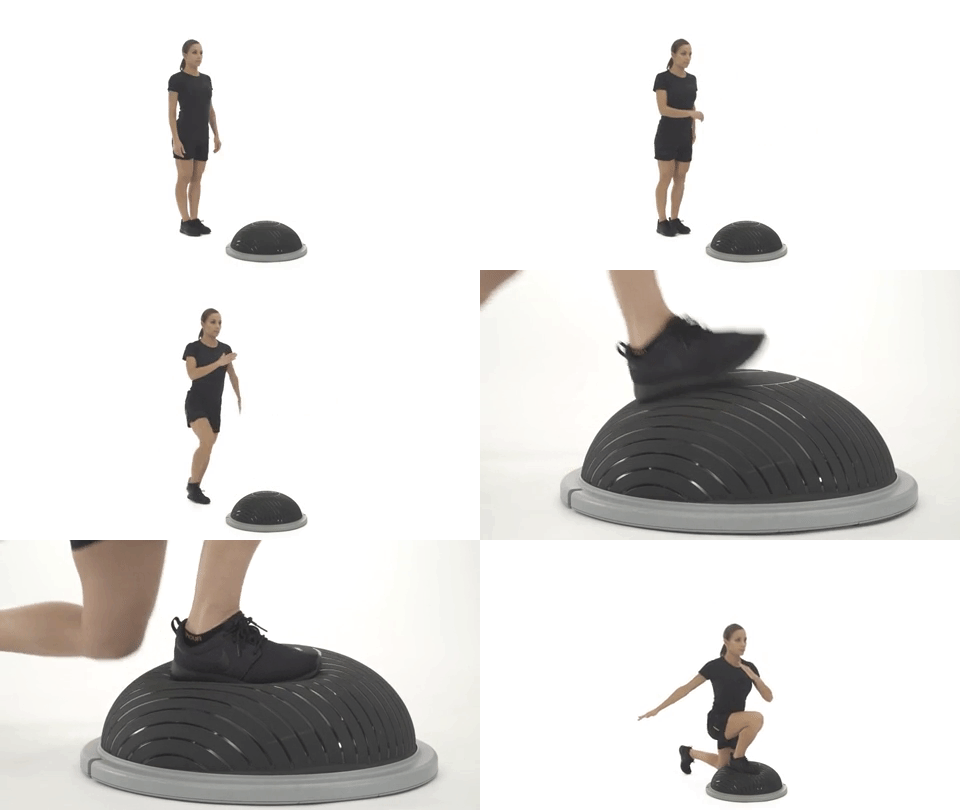
SQUATS, LUNGES, KICKBACK, HIP THRUST: CHOOSE THE RIGHT EXERCISE FOR YOU
From this examination we can conclude that the best exercises to train the gluteus are essentially:
- Squat and its variants: performed deep and with a foot placement slightly wider than shoulder-width, squats allow for comprehensive activation of the lower-body musculature.
- Lunges: with the torso slightly inclined forward to have a greater before stretching of the gluteal muscles. Excellent in all versions, especially in the back one: safer for the knee and with greater activation for the gluteus.
- Cable kickback: they involve both a flexion/extension component and a significant stabilizing challenge at the hip and core levels.
- Hip trust: in all its variants, deadlifts included. In particular, both the barbell and the single‑leg dumbbell deadlift variants are highly effective in activating the entire posterior chain
Sample workout for glutes
This sample routine combines the most effective lower-body movements into a balanced, performance-oriented session. Use it as a guide to structure your training and get the most out of each exercise.Here is a recommended setup.
Alternatively, you can perform this sequence.
Gluteal exercises should be performed 2 to 3 times a week, keeping the primary compound movements within a range of 6 to 12 repetitions.
Glute training deserves a clear and structured approach. With the correct exercises and proper technique, your results become both highly achievable and sustainable. Rather than chasing temporary fitness trends, this approach focuses on building long-term strength, balance, and confidence through intentional movement while maintaining high levels of comfort, safety, and motivation.
- Cable Kickback
15 repetitions - Alternating Back Lunge
10 repetitions
Alternatively, you can perform this sequence.
- Banded Squat with band at knee level
15 repetitions, actively pushing the knees outward against the resistance - Deep Squat
10 repetitions
Gluteal exercises should be performed 2 to 3 times a week, keeping the primary compound movements within a range of 6 to 12 repetitions.
Glute training deserves a clear and structured approach. With the correct exercises and proper technique, your results become both highly achievable and sustainable. Rather than chasing temporary fitness trends, this approach focuses on building long-term strength, balance, and confidence through intentional movement while maintaining high levels of comfort, safety, and motivation.


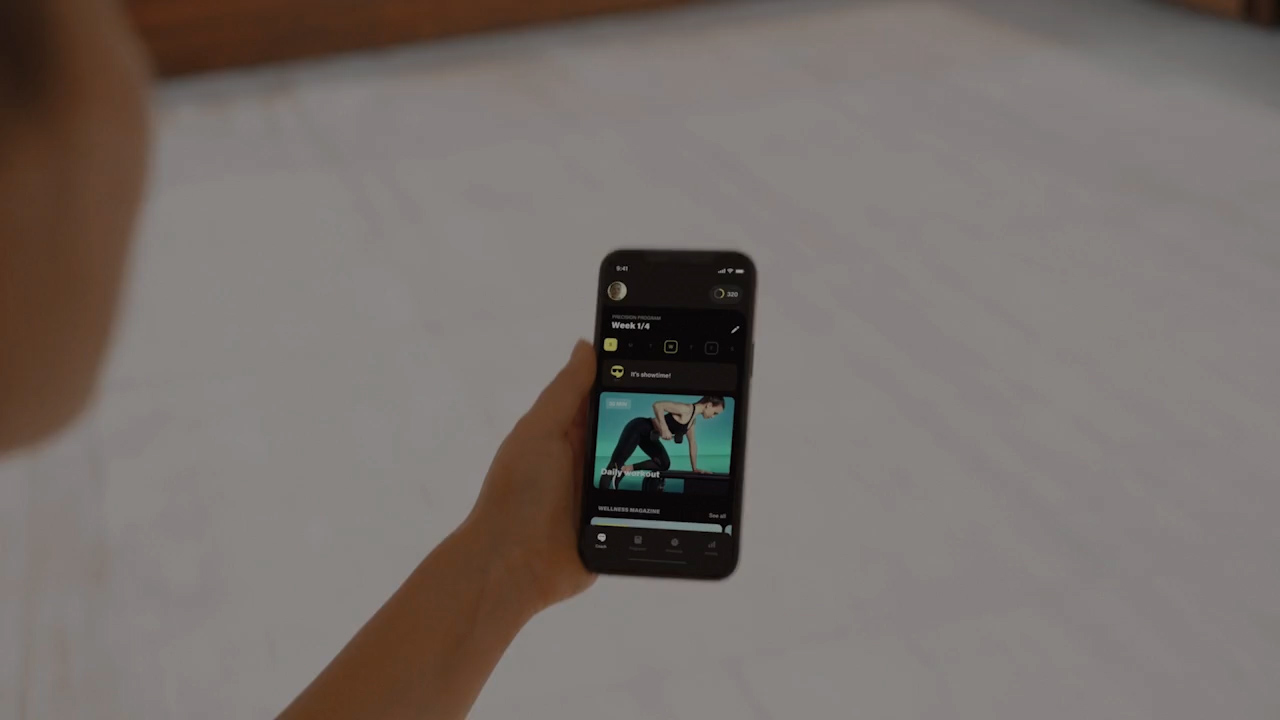
DOWNLOAD TECHNOGYM APP
Join the Technogym community and gain access to 1,000+ on-demand workouts, follow personalized training programs, and train with expert coaching and Technogym AI Coach guidance. Track your progress, take on challenges, and share your results to stay motivated.