

Tips and tricks to get the most out of your exercise bike workout
Indoor cycling significantly enhances training and preparation for competitions.

Exercise bikes are chosen by professional sportsmen or wellness novices, but also by those with joint problems or special conditions such as pregnancy.
Whatever your fitness goals, an exercise bike is the right tool for a cardiovascular workout where everything is under control, provided you choose the right model and the right work out position.
Here is a guide to understand how to use it, how to do the right exercise bike workout and what benefits you get from using a stationary bike.
Here is a guide to understand how to use it, how to do the right exercise bike workout and what benefits you get from using a stationary bike.
The Benefits of the Exercise Bike for Body and Mind
The main benefit you get is the ability to perform a low-impact joint cardiovascular workout. But the benefits do not end there. Let's discover together the main ones.
John Ratey, a psychiatrist at Harvard Medical School, in his book Spark: The Revolutionary New Science of Exercise and the Brain, tells of patients who after a year of "cycling therapy" were greatly improved by severe depression. In short, the scientists who have been studying the benefits of cycling on our brains for years agree: pedalling lowers stress and reduces depression. Simply put, it offers happiness.
John Ratey, a psychiatrist at Harvard Medical School, in his book Spark: The Revolutionary New Science of Exercise and the Brain, tells of patients who after a year of "cycling therapy" were greatly improved by severe depression. In short, the scientists who have been studying the benefits of cycling on our brains for years agree: pedalling lowers stress and reduces depression. Simply put, it offers happiness.

Studies have shown that cycling is useful for the prevention of cardiovascular disease and prevents it from worsening in the elderly. Cycling, in fact, is a resistance sport and cycling gradually strengthens not only the heart but also lung ventilation.
One hour of cycling burns up to 500 calories. A valid ally against being overweight, especially in women: according to a research published in Archives of Internal Medicine, which studied the beneficial effects of cycling on pre-menopausal overweight women, an hour of cycling, several times a week, has slimming effects.
Unlike running, cycling is a low-impact sport: by pedalling, we do not put pressure on the lower limb joints. That's why it is recommended for knees. Cycling improves muscle metabolism, especially for the benefit of buttocks, thighs and calves. Not only that. It also strengthens the muscles and bones of the dorsal area, so the back also benefits.
The more you pedal intensely, the longer your life expectancy is, especially because you avoid heart disease. It is supported by a Danish study: for women, 2 to 3 years old, and for men, from 4 to 5 years old.
One hour of cycling burns up to 500 calories. A valid ally against being overweight, especially in women: according to a research published in Archives of Internal Medicine, which studied the beneficial effects of cycling on pre-menopausal overweight women, an hour of cycling, several times a week, has slimming effects.
Unlike running, cycling is a low-impact sport: by pedalling, we do not put pressure on the lower limb joints. That's why it is recommended for knees. Cycling improves muscle metabolism, especially for the benefit of buttocks, thighs and calves. Not only that. It also strengthens the muscles and bones of the dorsal area, so the back also benefits.
The more you pedal intensely, the longer your life expectancy is, especially because you avoid heart disease. It is supported by a Danish study: for women, 2 to 3 years old, and for men, from 4 to 5 years old.

HOW TO MEASURE TRAINING INTENSITY
In professional cycling, the key values with which performance is measured are power and speed. The first, expressed in watts, is measured with power metres applied to exercise bikes and determines the rigorous method on which to base your workouts.
Another important parameter is the speed translated into RPM, revolutions per minute. And if we are not the new Nibali? How do we understand if we are doing effective but safe training?
Here is a very practical tip without disturbing the advanced theories of training: pedalling with a higher endurance and trying, in the same time unit, not to raise your heart rate too much.
Another important parameter is the speed translated into RPM, revolutions per minute. And if we are not the new Nibali? How do we understand if we are doing effective but safe training?
Here is a very practical tip without disturbing the advanced theories of training: pedalling with a higher endurance and trying, in the same time unit, not to raise your heart rate too much.
A BEGINNERS EXERCISE BIKE WORKOUT
Thanks to its characteristics, the stationary bike has very few contraindications and can be used even if we are beginners in the world of fitness. The only advice we can give, for greater control, is to use the heart rate monitor, which will allow you to perform an even safer exercise for your heart. Obviously this is true for every physical activity and the advice is to let the exercise be preceded and followed by an adequate initial warm-up and final stretching phase.
Riding on a stationary bike is a good cardiovascular exercise with many benefits but it would be wrong to think that these are immediate. Everything is a gradual process, which requires constancy and commitment. Compared to a treadmill or crosstrainer, the exercise bike takes longer to achieve the same training results.
A daily 30-minute workout on the exercise bike is an ideal compromise for those who want to stay fit without dedicating too much time to physical activity. This type of session helps activate metabolism, improve blood circulation, and strengthen the cardiovascular system. It also stimulates endorphin production, reducing stress and improving mood. It’s especially suitable for those with a sedentary lifestyle who want to introduce a healthy and sustainable habit.
Even short 15–20 minute sessions can have a positive impact, especially if done at moderate or high intensity. This type of workout is perfect for those with little time who still want to stay active. It can be used as a warm-up, part of a HIIT (High-Intensity Interval Training) circuit, or an active break during the workday. Despite the short duration, it improves focus, stimulates circulation, and helps keep leg and lower back muscles active.
One hour a day on the exercise bike is a significant commitment, ideal for those with weight loss, athletic training, or endurance goals. This workout can burn up to 500 calories, deeply tone the muscles of the legs, glutes, and back, and greatly improve lung capacity. It’s important to alternate intensity and rhythm to avoid muscle overload and stay motivated. Using preset programs or listening to music can make the workout more engaging and sustainable over time.
However, for a good level of physical activity, it is ideal to reach 150 minutes per week, trying to be constant for at least 3 months.
Riding on a stationary bike is a good cardiovascular exercise with many benefits but it would be wrong to think that these are immediate. Everything is a gradual process, which requires constancy and commitment. Compared to a treadmill or crosstrainer, the exercise bike takes longer to achieve the same training results.
30-minute workouts per day
A daily 30-minute workout on the exercise bike is an ideal compromise for those who want to stay fit without dedicating too much time to physical activity. This type of session helps activate metabolism, improve blood circulation, and strengthen the cardiovascular system. It also stimulates endorphin production, reducing stress and improving mood. It’s especially suitable for those with a sedentary lifestyle who want to introduce a healthy and sustainable habit.
Between 15 and 20 minutes
Even short 15–20 minute sessions can have a positive impact, especially if done at moderate or high intensity. This type of workout is perfect for those with little time who still want to stay active. It can be used as a warm-up, part of a HIIT (High-Intensity Interval Training) circuit, or an active break during the workday. Despite the short duration, it improves focus, stimulates circulation, and helps keep leg and lower back muscles active.
1 hour of cycling per day
One hour a day on the exercise bike is a significant commitment, ideal for those with weight loss, athletic training, or endurance goals. This workout can burn up to 500 calories, deeply tone the muscles of the legs, glutes, and back, and greatly improve lung capacity. It’s important to alternate intensity and rhythm to avoid muscle overload and stay motivated. Using preset programs or listening to music can make the workout more engaging and sustainable over time.
However, for a good level of physical activity, it is ideal to reach 150 minutes per week, trying to be constant for at least 3 months.


HOW TO ACHIEVE THE CORRECT POSITION ON A STATIONARY BIKE
There are 5 points of contact with a stationary bike: the two hands on the handlebar, the two feet on the pedals and the pelvis on the saddle. It goes without saying that these distances cannot be changed and vary depending on the ability of the cyclist, so what we can do is adapt the bike to our build.
An incorrect position can cause some problems: for example, too high saddle height leads us to strain with the thigh muscles to follow the rotation of the pedals and this causes muscle overloads and early fatigue, not to mention that pedalling itself is less effective.
The adjustment of an indoor stationary bike is certainly simpler than a racing bike. However, it is good to follow some tricks. Here's how to do it:
An incorrect position can cause some problems: for example, too high saddle height leads us to strain with the thigh muscles to follow the rotation of the pedals and this causes muscle overloads and early fatigue, not to mention that pedalling itself is less effective.
The adjustment of an indoor stationary bike is certainly simpler than a racing bike. However, it is good to follow some tricks. Here's how to do it:
- on a bike: climb up the bike and grab the handlebar. Then place the metatarsus (they are between the tarsal bones of the hind and mid-foot and the phalanges of the toes) on the pedals and make sure that one of the lower legs is bent by 5/10 degrees;
- on a reclined bike: find the correct position when, with both feet on the pedal, one of the legs is almost completely flat and forms an angle of 5 / 10 degrees.
A separate chapter deserves the regulation of indoor stationary bikes.
- Seat height. Position yourself next to the bike and check that the saddle is at the intersection of the femur and hip. Then sit on the saddle and place the heels on the pedal. Make sure that the foot does not lose contact with the pedal during a complete turn and that when the pedal is at its lowest point, the leg is spread but not completely (approximately 95%).
- Adjusting the handlebar. Optimal adjustment means that it is just as high as the saddle. In the case of newcomers or people with physical problems (back pain, pregnancy), you can opt for a slightly higher height. As a general rule, the handlebar should allow a comfortable position of the arms (not fully extended), a secure grip in different positions, and a consequent general "dynamic" position (at the level of the torso and arms).
- Seat horizontal adjustment. When pushing downwards, while the pedal is at 3 o' clock, we must check that the centre pin of the pedal is in line with the front of the knee.


HOW TO CHOOSE THE RIGHT STATIONARY BIKE
There are three different stationary bike models that we can use depending on our physical condition and the type of exercise we want to do. The basic movement does not change, it is always a pedal stroke, but the execution and position are different. The three different bikes are:
VERTICAL BIKE
Basically, this stationary bike resumes the characteristics and movement of a road bicycle. The position during exercise is closed, with the bust tilted forward, and is therefore suitable for those who want a performance workout. Suggested vertical bikes: Bike Personal and Technogym Cycle.
RECLINE BIKE
This stationary bike has a comfortable and accessible seat that allows a more open working position; during movement the back and shoulders rest on an adjustable backrest, always receiving adequate support. You can use it in any physical condition in total tranquility. Suggested recline bikes: Recline Personal and Excite Recline.
BIKE FOR INDOOR CYCLING
This type of stationary bike has a mechanical resistance and a particular flywheel: the intensity of the training is changed as the pedal power varies.Used alone or in classes, it is particularly suitable if you want to perform a particularly intense aerobic workout or prepare for a sports competition.
Suggested bikes: Technogym Bike and Group Cycle.
- Classic vertical bike
- Recline bike
- Bike for Indoor cycling
VERTICAL BIKE
Basically, this stationary bike resumes the characteristics and movement of a road bicycle. The position during exercise is closed, with the bust tilted forward, and is therefore suitable for those who want a performance workout. Suggested vertical bikes: Bike Personal and Technogym Cycle.
RECLINE BIKE
This stationary bike has a comfortable and accessible seat that allows a more open working position; during movement the back and shoulders rest on an adjustable backrest, always receiving adequate support. You can use it in any physical condition in total tranquility. Suggested recline bikes: Recline Personal and Excite Recline.
BIKE FOR INDOOR CYCLING
This type of stationary bike has a mechanical resistance and a particular flywheel: the intensity of the training is changed as the pedal power varies.Used alone or in classes, it is particularly suitable if you want to perform a particularly intense aerobic workout or prepare for a sports competition.
Suggested bikes: Technogym Bike and Group Cycle.
Don’t miss these


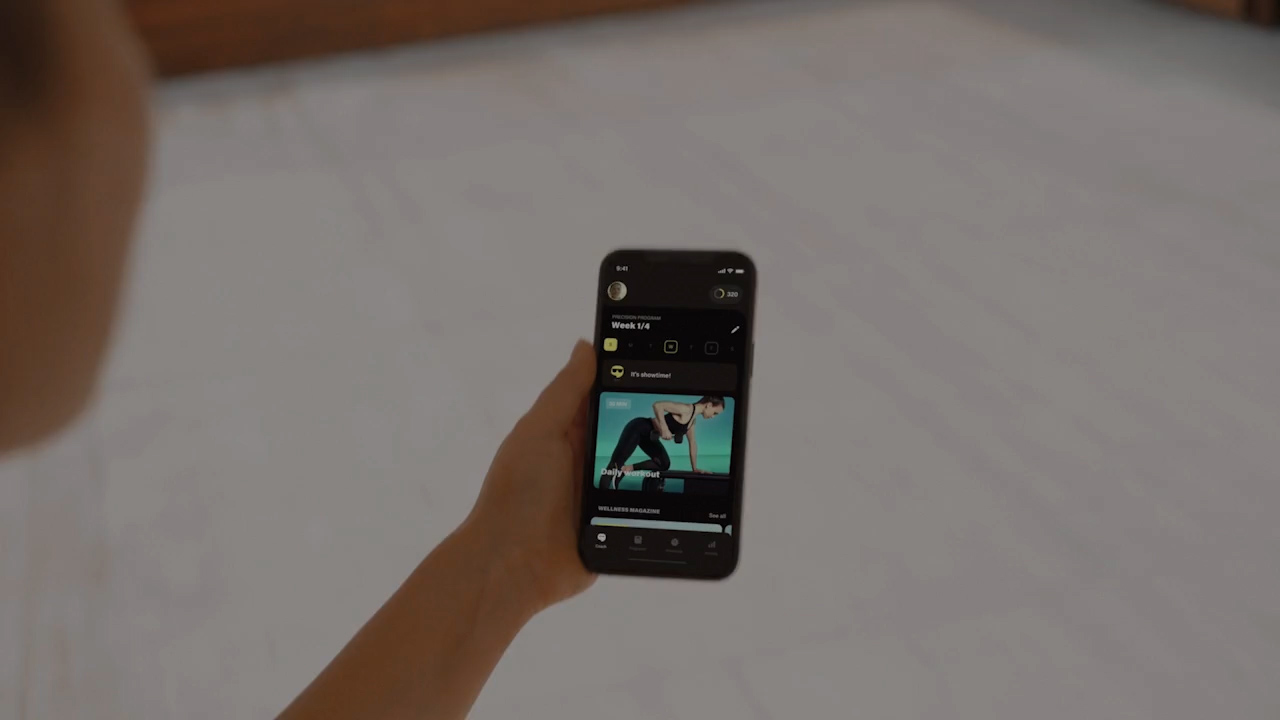
DOWNLOAD THE TECHNOGYM APP
Join the Technogym community and gain access to 1,000+ on-demand workouts, follow personalized training programs, and train with expert coaching and Technogym AI Coach guidance. Track your progress, take on challenges, and share your results to stay motivated.