
15 October 2026
Home abs training: The ultimate guide to a stronger core
A strong core is the quiet foundation of almost everything the body does well. It supports posture through long working days, protects the spine during lifting, and transfers power between the upper and lower body in every stride, swing and push. Home abs training is one of the most rewarding ways to build that foundation, because it asks for very little space and rewards precision far more than equipment. This guide explains how to train the abdominal muscles at home with intention.

The best way to train your abs without a gym
The best way to train abs at home begins with a shift in perspective. The core is not a single muscle to be worked to exhaustion, but a system that includes the rectus abdominis at the front, the obliques at the sides, the deep transversus abdominis that wraps around the trunk, and the muscles of the lower back. Together, they stabilize the spine and control movement.
Effective training reflects all of these roles. Some exercises ask the abdominals to flex the spine, as in crunches and reverse crunches. Others ask them to resist movement: planks resist extension, side planks resist lateral bending, and anti-rotation presses resist twisting. A balanced home routine includes both, performed slowly, with steady breathing and full attention on the muscle doing the work.
Effective training reflects all of these roles. Some exercises ask the abdominals to flex the spine, as in crunches and reverse crunches. Others ask them to resist movement: planks resist extension, side planks resist lateral bending, and anti-rotation presses resist twisting. A balanced home routine includes both, performed slowly, with steady breathing and full attention on the muscle doing the work.


Targeting the rectus abdominis: a strategic approach
The rectus abdominis is the long muscle that runs vertically along the front of the abdomen, and the one most associated with a defined midsection. Strictly speaking, it is a single muscle and cannot be isolated into separate parts. Yet the way an exercise is performed changes where the effort is felt: movements that bring the ribcage toward the pelvis emphasize the upper region, while movements that bring the pelvis toward the ribcage emphasize the lower region. A strategic program uses both.
TECHNIQUES FOR THE UPPER ABDOMINAL REGION
To learn how to train upper abs at home, focus on exercises in which the upper body moves while the pelvis stays still. The classic crunch remains effective when performed correctly: lift the shoulder blades just off the floor, exhale as the ribcage curls toward the pelvis, pause briefly at the top and lower with control. The neck stays relaxed, with the hands supporting the head lightly rather than pulling it.
From there, variations add challenge. Crunches with the arms extended overhead lengthen the lever and increase the load. A crunch on a stability surface, such as the Balance Dome, extends the range of motion and adds an element of instability that asks for greater control. Cable-style crunches performed kneeling with Elastic Bands anchored above head height introduce external resistance with very little equipment. In every variation, the goal is the same: slow, deliberate flexion rather than momentum.

EFFECTIVE LOWER ABS ACTIVATION
Lower abs training at home reverses the logic: the pelvis moves toward the ribcage while the upper body remains stable. The reverse crunch is the reference exercise. Lying on the back with knees bent, curl the pelvis gently off the floor using the abdominals rather than swinging the legs, then lower slowly until the feet almost touch the ground.
Dead bugs are equally valuable. Extending the opposite arm and leg while keeping the lower back in quiet contact with the floor teaches the deep core to stabilize the pelvis, a skill that transfers directly to lifting and running. As control improves, leg raises, hollow holds and knee tucks from a plank position add intensity. Loop Bands placed around the feet during dead bugs or leg lowers add a controlled resistance that makes each repetition more demanding. The key is to stop each set as soon as the lower back begins to arch away from the floor: that is the signal that the abdominals are no longer doing the work.

For a wider view of training at home, our home training guide is the natural companion to this article.
Progressive overload: incorporating strength and resistance
The abdominal muscles respond to the same principle as every other muscle: progressive overload, a gradual increase in the challenge over time. Performing the same number of crunches week after week will maintain the current level, but it will not build a stronger core. Progress comes from adding load, slowing the tempo, extending the lever or reducing stability.
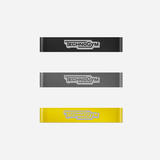
Resistance training for abs at home offers many ways to apply this principle. Elastic Bands, with three resistances identified by color, allow anti-rotation presses and kneeling crunches to progress in measured steps. A dumbbell held at the chest turns a crunch or a side bend into a loaded exercise. Kettlebells bring dynamic movements such as swings, in which the core must brace powerfully to protect the spine, as well as loaded carries, in which simply walking with a weight held on one side challenges the obliques to keep the trunk upright.
Strength training for abs at home also extends to compound movements. Squats, deadlifts and overhead presses require the core to stabilize heavy loads, and they build a strength that isolated exercises alone cannot provide. For a structured introduction to load progression, our beginner strength program explains the fundamentals.
How to structure a professional workout program
A professional abs training program at home is built around balance, frequency and progression. Each session should include at least one exercise for each core function: flexion (crunch or reverse crunch), anti-extension (plank or dead bug), anti-lateral flexion (side plank or loaded carry) and anti-rotation (banded press). This ensures the whole core develops evenly, supporting both performance and posture.
For most people, two or three dedicated core sessions per week, on non-consecutive days, offer a sound rhythm. Within each session, choose a challenge level at which the final repetitions feel demanding but technique remains clean. When a set becomes comfortable, progress one variable at a time: more resistance, a slower tempo, a longer hold or a less stable surface.
Visible definition depends largely on body composition, so pair core work with full-body training, such as high intensity resistance training, and balanced nutrition.
A 15-MINUTE CIRCUIT FOR SIX-PACK DEFINITION
This circuit brings the principles above into a single, efficient session for six pack abs training at home. Perform each exercise for 40 seconds, followed by 20 seconds of rest, and complete three rounds of the five movements. Total time: 15 minutes.
- Dead bug: slow, alternating arm and leg extensions, lower back in contact with the floor.
- Crunch: controlled flexion with a brief pause at the top; hold a light weight at the chest to progress.
- Reverse crunch: curl the pelvis off the floor without swinging the legs.
- Side plank: 20 seconds per side, with the body in a straight line from head to feet.
- Banded anti-rotation press: with an Elastic Band anchored at chest height, press the hands forward and resist the pull, alternating sides each round.

Elevate your core results with the right tools
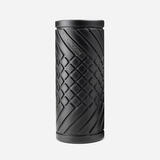
Core training needs very little equipment, but the right tools make every session more precise, more varied and more pleasant. The Balance Dome, with its flat base and two handles, is ideal for push-ups and core exercises as well as balance work. Elastic Bands and Loop Bands add resistance in a format that disappears into a drawer, while the Foam Roller, with its variable stiffness, helps release tension in the back and hips after a session.
Those who want to integrate core work into a broader routine can turn to a functional training station such as Technogym Bench or a multi gym such as Unica. Pilates, a method centered on core control, is another valuable option, on the mat or on a reformer; our guide to Pilates at home explains how to begin.
Core strength can also be supported beyond the workout itself. The Wellness Ball turns sitting into active time: while seated, the back performs small micro-movements that improve the spine-stabilizing action of the abdominal and lumbar muscles.





FAQs
More on Home training


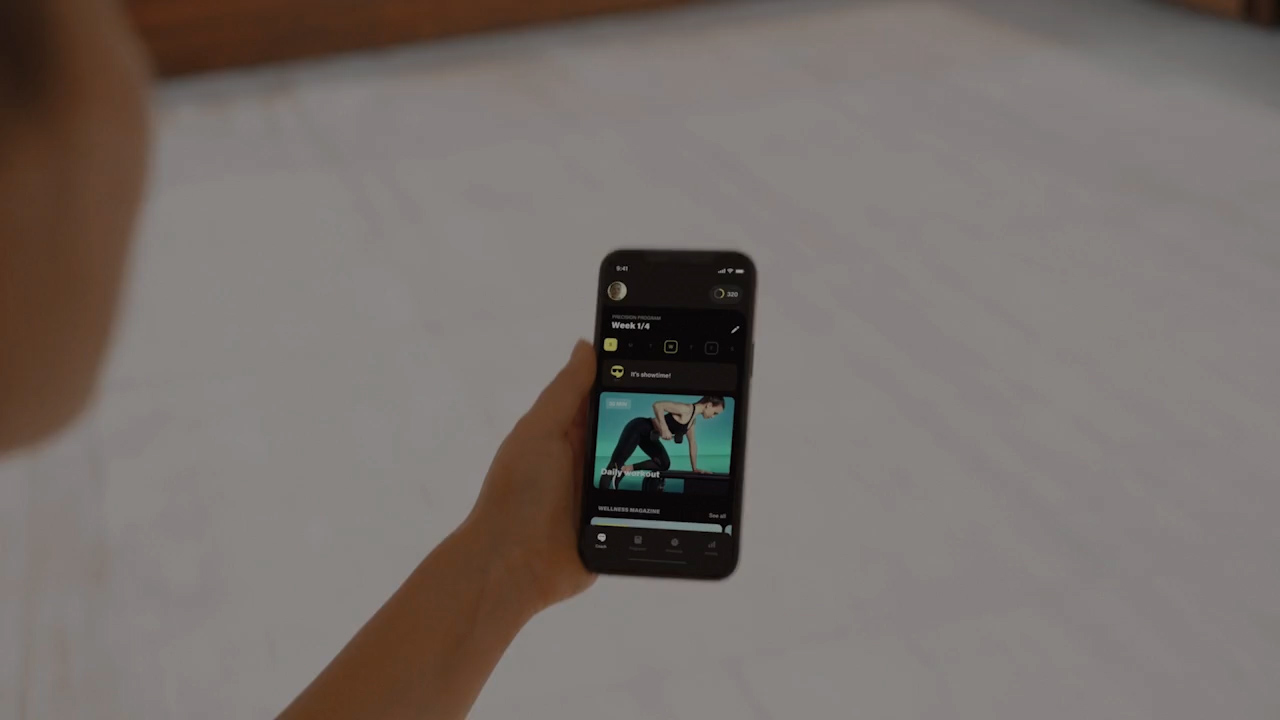
DOWNLOAD TECHNOGYM APP
Join the Technogym community and gain access to 1,000+ on-demand workouts, follow personalized training programs, and train with expert coaching and Technogym AI Coach guidance. Track your progress, take on challenges, and share your results to stay motivated.