
8 September 2026
Home Workout Guide: Strength, Cardio and Full-Body Training at Home
Training at home has become one of the most personal expressions of a well-considered life. There is no commute, no fixed timetable and no compromise on the atmosphere of the space: just a room shaped around the way you move, ready whenever you are. This guide brings together everything needed to train well at home.

Setting Up Your Home Gym Environment
The quality of a home workout begins long before the first repetition. Equipment, light, flooring and the feeling of a room all influence how often you train and how much you enjoy it. A well-planned environment removes friction: everything is where it should be, the space invites movement, and starting a session takes no more effort than stepping into the room.


Learn from the experts
Our fitness and design specialists are here to help you craft your perfect home gym


CHOOSING THE RIGHT EQUIPMENT FOR WEIGHT LOSS TARGETS
When the goal is weight management, the most effective setup combines two qualities: consistent energy expenditure and the preservation of lean muscle. Cardio equipment makes daily movement effortless, while strength tools protect the muscle that keeps the body strong and metabolically active. Neither works as well on its own as the two do together.
For cardio, the right choice depends on how you most enjoy moving. A treadmill suits those who enjoy walking and running, and it adapts to every level: brisk incline walks for steady, low-impact sessions, or changes of pace for interval training. An exercise bike is a natural alternative for those who prefer a seated, joint-friendly workout, and it works equally well for long, steady rides and shorter, more intense efforts. On the strength side, a set of dumbbells and a kettlebell are enough to build a complete routine around compound movements.
What matters most is choosing equipment you will genuinely want to use, day after day. For a closer look at the options, explore our guide to the best equipment for weight loss at home.


PLANNING YOUR HOME WORKOUT SPACE
A home gym does not require a large room; it requires a considered one. Start with light and air: natural light lifts energy, and good ventilation keeps longer sessions comfortable. Then think in zones. A cardio area for a treadmill or bike, a strength area for weights and a floor area for mobility, core work and stretching give each type of session its own place, even within a single room. Storage matters too: equipment that has a home of its own keeps the space calm and orderly.For a step-by-step approach to layout and proportions, our home gym room planner is the natural next read.

Foundations of Home Strength and Resistance
Strength is the quality that supports everything else: posture, balance, metabolic health and the ability to move freely at every stage of life. At home, it can be built progressively and safely, starting with light resistance and moving toward heavier loads as technique and confidence grow.
GETTING STARTED WITH RESISTANCE TRAINING
Resistance training simply means asking the muscles to work against a force, whether that force comes from bands, weights or the body itself. It is the most accessible way to begin, because the load can be adjusted precisely and the equipment requires very little space.
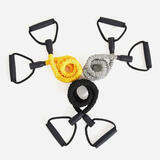
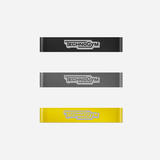
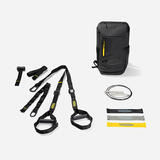
Elastic Bands are an elegant starting point. With easy-to-hold handles and three resistances identified by color, they allow every major muscle group to be trained with a controlled, gradual load. Loop Bands add resistance to bodyweight exercises for legs and glutes, while a Suspension Training Kit uses body weight and the angle of each exercise to adjust intensity, so the same tool can challenge a beginner and an experienced athlete alike.
Focus first on technique and control, moving slowly enough to feel the working muscle. Train the whole body two or three times a week rather than isolating single areas. And progress gradually, adding resistance or repetitions only when the current level feels steady. To learn how to do resistance training at home, our dedicated guide covers exercises and progressions in detail.



INTRODUCTION TO HOME STRENGHT TRAINING
Once the body is familiar with resistance, strength training at home can move toward heavier, more structured work. The foundation lies in a handful of compound movements: squats, hinges such as deadlifts, presses and rows. Together they train the whole body efficiently and form the backbone of almost every effective program.
The key principle is progressive overload: a gradual, intelligent increase in load or volume over time. Dumbbells and kettlebells allow this to happen in small steps, and for those who want to train with barbells, Rack Personal brings professional performance into the home. Paired with Bench Personal, it forms a complete free weight station.
Rest is part of the program too. Allowing time for recovery between sessions that train the same muscles helps the body adapt and grow stronger. Our guide on how to do strength training at home explains how to structure the first months.


MASTERING FUNCTIONAL
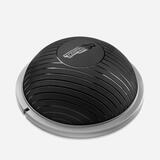
Functional training prepares the body for the movements of daily life: lifting, carrying, rotating, stepping, reaching and stabilizing. Rather than isolating single muscles, it trains them to work together across several joints and directions of movement, improving coordination, balance and control. The result is strength that carries over naturally into everyday activities and sport.Most functional programs are built around a small set of fundamental movement patterns: the squat, the hinge, the lunge, the push, the pull, rotation and the carry. A balanced session draws on several of them, often arranged as a circuit, so that the whole body is trained in a single workout. At home, functional training is easy to adapt to any level. Body weight is enough to begin, and progress comes from a greater range of motion, a slower tempo, added load or a less stable base. As technique becomes consistent, a few versatile tools widen the possibilities: kettlebells for dynamic movements such as swings, resistance bands for pulling and rotational work, and an unstable surface such as the Balance Dome to challenge stability and coordination. For complete sessions and exercise ideas, discover our guide to functional training at home.

Targeting Specific Muscle Groups at Home
A balanced program trains the body as a whole, yet understanding each muscle group helps refine technique and correct imbalances. The following sections outline how to train the chest, back, legs and core at home, with exercises that suit every level.
BUILDING A STRONG CHEST
The chest is trained through pressing movements, and many of the most effective ones need very little equipment. Push-ups remain the essential starting point and can be adapted in countless ways: elevated hands to reduce the load, a slower descent to increase time under tension, or a wider or narrower hand position to shift the emphasis.
With dumbbells, the floor press is an excellent home exercise, as the floor naturally limits the range of motion and keeps the shoulders comfortable. On a bench, presses and flyes add range, and an incline shifts the focus toward the upper chest. For heavier loads, the barbell bench press remains the reference, ideally performed in a rack with safety bars.

EFFECTIVE BACK WORKOUT
A strong back supports posture, protects the spine and balances the pressing work of chest training. The core of any back routine is pulling: rows in their many forms, combined with hinge movements that train the lower back and the posterior chain.
One-arm dumbbell rows, supported on a bench, allow each side to be trained with precision. Renegade rows, performed in a plank position, add a demanding core component, and they are easier to perform with flat-sided dumbbells, such as Technogym Hexagon Dumbbells, which stay stable on the floor. Suspension rows let you adjust intensity simply by changing the angle of the body, and band pull-aparts with Elastic Bands strengthen the upper back and rear shoulders, which are often neglected after long hours at a desk. Kettlebell deadlifts and swings build the hips and lower back as a single, coordinated system.

POWERFUL LEG DAY AT HOME
The legs contain the largest muscles in the body, and training them well has an effect that reaches far beyond strength. A home leg day revolves around squats, lunges and hinges, with single-leg work to build balance and correct asymmetries.
Goblet squats with a kettlebell teach upright posture and depth; split squats, step-ups and walking lunges with dumbbells challenge each leg independently; Romanian deadlifts train the hamstrings and glutes through the hinge. For heavier work, Rack Personal makes the barbell back squat accessible at home, with the reassurance of safety bars set at the right height. Single-leg balance on the Balance Dome strengthens the ankles and feet, while Loop Bands add resistance to bridges and lateral steps that activate the glutes.
Allow the legs enough recovery between demanding sessions, and treat mobility for the hips and ankles as part of the routine.

CORE AND ABS SCULPTING
The core is far more than the abdominal muscles visible on the surface. It includes the deep muscles that stabilize the spine and transfer force between the upper and lower body, which is why a strong core improves almost every other exercise.
Effective home abs training favors control over speed. Planks and side planks build endurance; dead bugs and bird dogs teach the body to stabilize while the limbs move; banded anti-rotation presses, performed with Elastic Bands anchored at chest height, train the core to resist twisting.
Core work also extends into the rest of the day. The Wellness Ball turns sitting into active time: while seated, the back performs small micro-movements that improve the spine-stabilizing action of the abdominal and lumbar muscles. It is worth remembering that the definition of the abdominal muscles depends largely on overall body composition, so core training works best alongside regular cardio and balanced nutrition.
Home abs training

Specialized Home Workout Routines
Once the foundations are in place, specialized routines bring variety and focus to a home program. Each of the following approaches offers a different way to challenge the body, and together they keep training fresh over the long term.
HIGH INTENSITY RESISTANCE TRAINING
High Intensity Resistance Training (HIRT) combines strength exercises with short recovery periods, building strength and conditioning within the same session. Because it relies on compact equipment and efficient work, it suits home training particularly well, delivering a demanding workout in a short time.
Kettlebells are natural companions for this kind of work, as are dumbbells and the Jump Rope, which adds cardiovascular intensity between strength intervals. As with any intense format, quality of movement comes first; intensity should never come at the expense of technique.
HIRT home gym workouts

PILATES FOR BEGINNERS
Pilates brings a different rhythm to the week: slow, precise movement guided by breath, with a strong emphasis on core control, posture and alignment. For beginners, mat work is the natural starting point, teaching the fundamental principles before more complex sequences are introduced. Light Dumbbells can add a precise, controlled load to arm series and standing work.
For those ready to bring the studio experience home, Technogym Reform was designed with input from leading Pilates teachers and crafted from materials such as wood, aluminum and vegan leather.
Pilates at home: first steps

INDOOR ROWING WORKOUTS
Rowing is one of the most complete forms of exercise available at home. Each stroke engages the legs, core, back and arms in a single fluid sequence, combining cardiovascular conditioning with muscular endurance while placing very little impact on the joints.
Technique is the foundation. The stroke begins with the legs, continues with a slight lean of the torso and finishes with the arms, then returns in reverse order for the recovery. Once this sequence feels natural, workouts can take many forms: steady, longer sessions to build aerobic endurance, shorter intervals to develop power, or pyramid formats that alternate efforts of different lengths.
Rowing home workouts

Mindset and Consistency
Equipment and programs matter, but the results of home training depend above all on one quality: consistency. The body changes through regular practice over months and years, and the habits that support that practice deserve as much attention as the workouts themselves.
STAYING MOTIVATED TO EXERCISE AT HOME
Training at home offers complete freedom, and freedom works best with a little structure. Scheduling sessions as you would any other appointment turns intention into routine. Keeping the training space visible and ready, rather than hidden away, makes beginning effortless. Guided content helps too: Technogym Bench includes video workouts led by Technogym trainers, while Technogym Run offers on-demand video sessions and outdoor routes that bring iconic trails into the room.
Variety keeps the experience fresh: alternating strength, cardio, Pilates and functional sessions across the week engages the body and the mind in different ways. And recovery belongs in the plan, with tools such as the Foam Roller, whose variable stiffness allows muscle tension to be released in a personalized way.
For more ideas, explore our tips to stay motivated to work out at home, and let home become the place where wellness is practiced every day.


