
16. mars 2026
An anatomical introduction to the glutes and 4 science-proven exercises to train them
Among the areas of the body that receive the most attention during training, the glutes stand at the top of the list. And not just for aesthetic reasons: they play a key role in posture, stability, and everyday performance. Understanding how to train them effectively means investing in more efficient movement, greater functional strength, and long‑lasting, meaningful results.

many people look for clear guidance on how to strengthen this area effectively and safely. The goal goes beyond aesthetics: it’s about building functional muscle that enhances posture, stability, and the quality of everyday movement.
Gluteus are a muscle group part of the posterior kinetic chain. Their functions for the body take three different activities:
Without taking into consideration the role that genetics has on the shape and volume of the buttocks, we will try to deepen the main dynamics on which it is possible to intervene with training.
Gluteus are a muscle group part of the posterior kinetic chain. Their functions for the body take three different activities:
- Posture
- Performance
- Movement
Without taking into consideration the role that genetics has on the shape and volume of the buttocks, we will try to deepen the main dynamics on which it is possible to intervene with training.

NEUROMUSCULAR ACTIVATION OF THE BUTTOCKS MUSCLES
When doing an exercise, you need to be sure that the work you’ll do is fitting for the target muscle.
Often, however, many of the exercises that are specifically made for the gluteus are the responsibility of the hamstrings.
Hamstrings are a biarticular muscle group meaning they span over both the knee and hip joints. This means that the hamstrings support the glutes with hip extension (while they also are responsible for knee flexion).
Often, however, many of the exercises that are specifically made for the gluteus are the responsibility of the hamstrings.
Hamstrings are a biarticular muscle group meaning they span over both the knee and hip joints. This means that the hamstrings support the glutes with hip extension (while they also are responsible for knee flexion).

Often, however, many of the exercises that are specifically made for the gluteus are the responsibility of the hamstrings. Just as often, however, you can see that the back muscles of the thigh also work when performing exercises that should mainly affect the gluteus, we find the explanation for this phenomenon in an altered dynamic at the neuromuscular level.
While consciously you would like to contract the gluteus during an exercise, it will be activated partially or not at all and instead you will notice a contraction of the hamstrings.
Some selected test exercises could help in defining the level of glute activation:
GLUTE BANDS
Wrap band around the legs (just above the know). These can be used within warmup and prehab activation.
MONSTER WALKS
Movement should originate from pushing the knee out rather than the ankle.
SUPINE GLUTE BRIDGES
Lying on your back. Bend your knees to 90° and raise your gluteus off the floor. Hold position at the top, squeezing your gluteus and return.
While consciously you would like to contract the gluteus during an exercise, it will be activated partially or not at all and instead you will notice a contraction of the hamstrings.
HOW TO KNOW IF YOU HAVE A PROPER DYNAMIC OF NEUROMUSCULAR ACTIVATION?
How to know if you have a proper dynamic of neuromuscular activation?Some selected test exercises could help in defining the level of glute activation:
GLUTE BANDS
Wrap band around the legs (just above the know). These can be used within warmup and prehab activation.
MONSTER WALKS
Movement should originate from pushing the knee out rather than the ankle.
SUPINE GLUTE BRIDGES
Lying on your back. Bend your knees to 90° and raise your gluteus off the floor. Hold position at the top, squeezing your gluteus and return.

On the other hand, there will be an unbalanced neuromuscular activation at hamstrings level if, during the test, these are activated first, with a "violent" contraction or if you notice the absence of activation of the gluteus.
If the test shows a non-optimal neuromuscular activation, it is necessary choose corrective exercises before being able to perform specific workouts for the hamstrings. These exercises are necessary to avoid that the work done during the various series does not excessively stimulate the hamstrings.
The first and simplest corrective exercise is explained below:
Do this exercise 3 times per leg, 15 repetitions per series, before each training session.
If the test shows a non-optimal neuromuscular activation, it is necessary choose corrective exercises before being able to perform specific workouts for the hamstrings. These exercises are necessary to avoid that the work done during the various series does not excessively stimulate the hamstrings.
The first and simplest corrective exercise is explained below:
- Lateral decubitus with thighs bent at 90° on the torso, legs bent at 90° on the thighs.
- Keeping the heels of the feet in contact with each other, perform an abduction of the thigh.
- Avoid rotating with the torso and pelvis, but only move the lower limb.
Do this exercise 3 times per leg, 15 repetitions per series, before each training session.

HOW DO THE GLUTEAL MUSCLES INFLUENCE POSTURE?
The correct postural alignment is crucial for the results on the gluteus, in addition to a fundamental factor for health.
It can be noticed that people with a Lordotic posture (although this is a feature not functional to the proper biomechanics of the back) have the gluteal muscles particularly developed while not making special workouts. This happens because a condition of hyper lordosis puts the gluteal muscles in mechanical advantage, which even during the simple walk tend to shorten and lengthen more than those with a reduced lumbar curve.
This cycle of lengthening and shortening, higher than normal, creates a training stimulus that over time leads to a greater volume of the gluteus.
It is therefore necessary to start from the posture of the individual person, in order to bring back to the right level of tension and length the various muscle groups.The first consideration that must be made is whether you have a flattening of the lumbar curve with simple tests performed by a trainer or a physiotherapist. In the case of hypo lordosis it is essential to look for the causes of this posture and associate the corrective exercises for this problem with those of reinforcement for the gluteal muscles.

4 CAUSES OF FLAT BACK POSTURE
The causes can be varied. At the muscular/tendon level we find mainly:
- retracted hamstrings;
- a sacro tuberous ligament retraction (which is in anatomical continuity with the tendon of the long end of the femoral biceps) that brings the pelvis into construmation;
- excessive tension of the rectum and the obliques of the abdomen;
- a hypotonic of the iliacpsoas, of the square of the lobes, of the femoral rectum, of the tensor of the fascia lata and of the sartorius.

CRITERIA FOR CHOOSING EXERCISES FOR THE GLUTEAL MUSCLES
Solved any problems described in the two points above, you should choose the best exercises for the gluteus. It is necessary to remember, without excessively deepening the anatomy and biomechanics, that the gluteal muscles are composed of 3 muscles, all monoarticular:
- Gluteus Small
- Gluteus Medium
- Gluteus Maximus
- Need to use strong overloads: being a very strong musculature you need to choose exercises that allow you to move a certain load to be able to stimulate them at best.
- Working in a closed kinetic chain: being able to apply and push the overloads in the best possible way.
- Hip flexing at least 90°: being a monoarticular muscle it is mainly activated if the hip is flexed and extended. Exercises such as squat with a partial bending of the legs activate only the knee, not allowing the big buttock to perform its main function.
- Exercises in controlled destabilization: they will activate the buttocks as stabilizers of the hip.
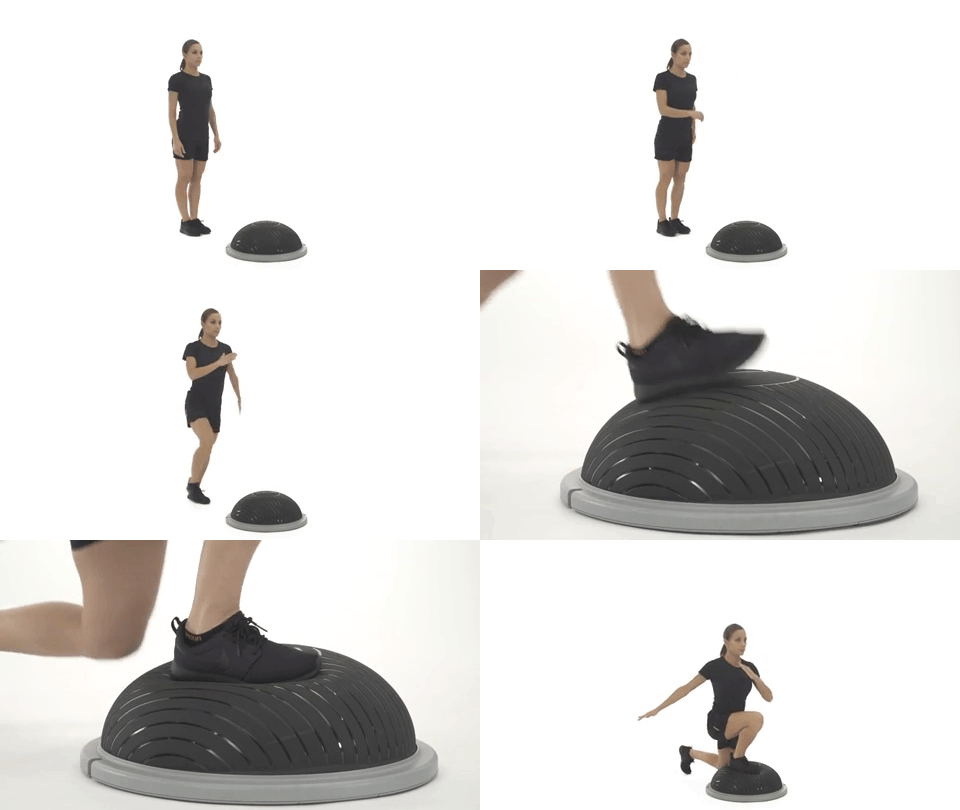
SQUATS, LUNGES, KICKBACK, HIP THRUST: CHOOSE THE RIGHT EXERCISE FOR YOU
From this examination we can conclude that the best exercises to train the gluteus are essentially:
- Squat and its variants: performed deep and with a foot placement slightly wider than shoulder-width, squats allow for comprehensive activation of the lower-body musculature.
- Lunges: with the torso slightly inclined forward to have a greater before stretching of the gluteal muscles. Excellent in all versions, especially in the back one: safer for the knee and with greater activation for the gluteus.
- Cable kickback: they involve both a flexion/extension component and a significant stabilizing challenge at the hip and core levels.
- Hip trust: in all its variants, deadlifts included. In particular, both the barbell and the single‑leg dumbbell deadlift variants are highly effective in activating the entire posterior chain
Sample workout for glutes
This sample routine combines the most effective lower‑body movements into a balanced, performance‑oriented session. Use it as a guide to structure your training and get the most out of each exercise.
An example could be:
Or
Glute training deserves a clear and structured approach. With the right exercises and the right technique, results become not only more achievable but also more meaningful. It’s not about chasing a trend — it’s about building strength, balance, and confidence through intentional movement.
An example could be:
- Kickback al cavo: 15 reps
- Alternating Back Lunges: 10 reps
Or
- Banded Squats (knee level), actively pushing them out: 15 reps
- Squat (deep): 10 reps
Glute training deserves a clear and structured approach. With the right exercises and the right technique, results become not only more achievable but also more meaningful. It’s not about chasing a trend — it’s about building strength, balance, and confidence through intentional movement.


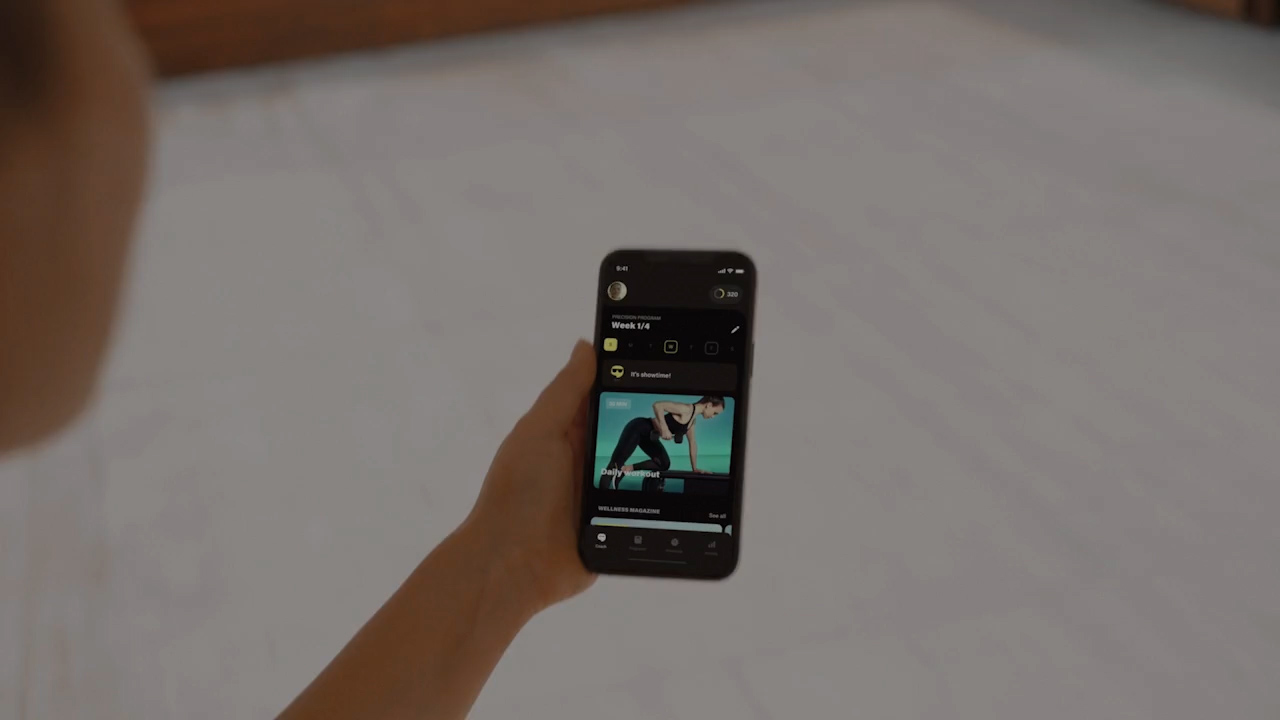
LAST NED TECHNOGYM-APPEN
Bli med i Technogym-fellesskapet og få tilgang til over 1 000 treningsøkter på forespørsel, følg tilpassede treningsprogrammer og trene med veiledning fra eksperter og Technogym AI Coach. Følg med på fremgangen din, ta utfordringer og del resultatene dine for å holde motivasjonen oppe.